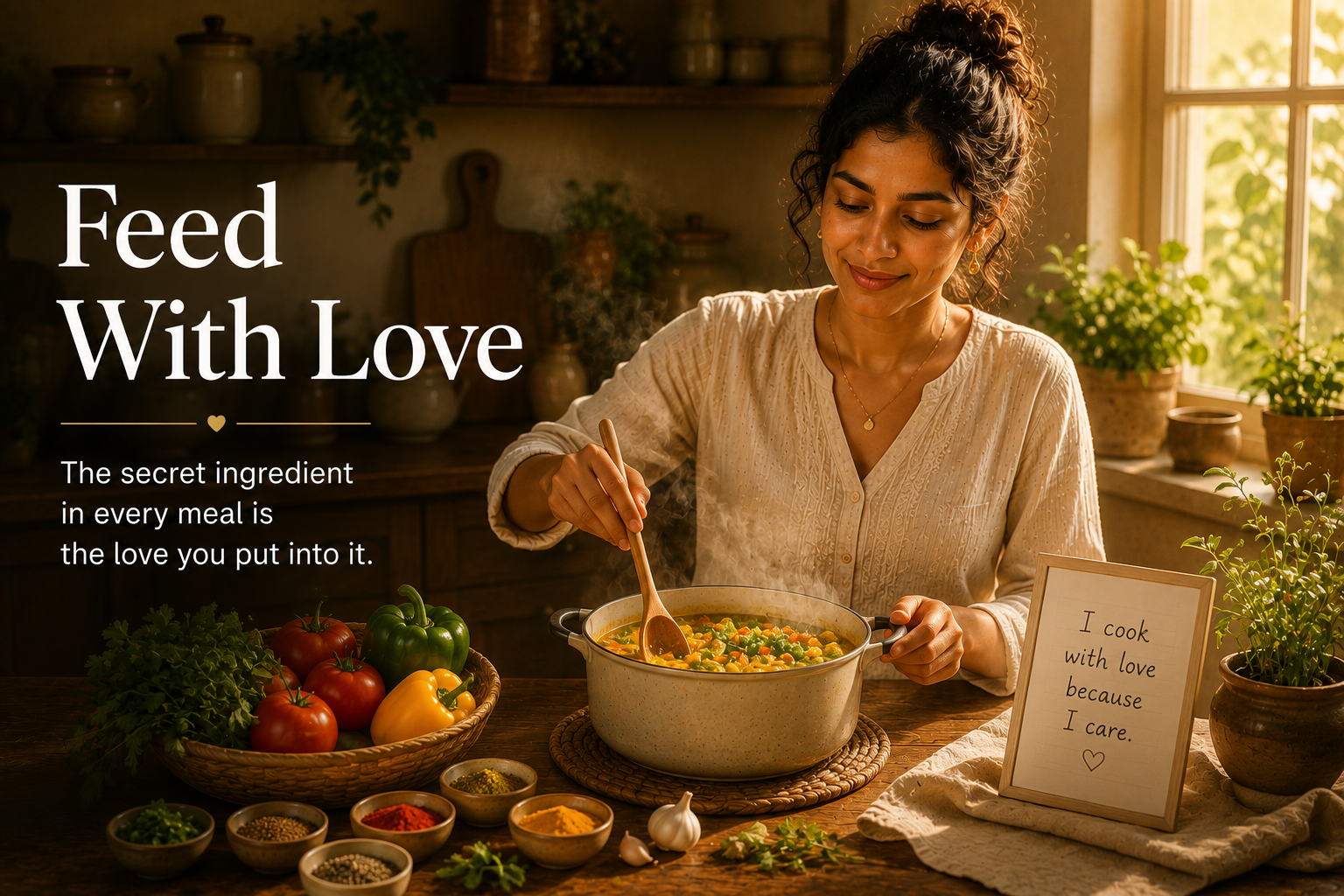
Feed With Love
Food changes when it is prepared with love. The ingredients may be ordinary, the recipe may be simple, and the kitchen may be busy, but something shifts when the intention is care. We have all felt this difference at some point. A meal does not need to be perfect to feel comforting. It needs to feel offered.
To feed with love is not only to cook elaborate meals. It is to bring attention, kindness and respect into the act of feeding. It may be a quick breakfast packed before school, a simple dinner after a long day, a bowl of khichdi during illness, or a snack served without being asked. Love often lives in these small gestures.
Many people remember food through the person who made it. We say ‘my mother's dal,’ ‘my grandmother's pickle,’ ‘my father's tea,’ or ‘that dish from home.’ The recipe becomes inseparable from the feeling of being cared for. Food carries the fingerprint of the person who prepared it.
Serving is also part of nourishment. The way food is placed before someone, the tone at the table, the willingness to notice what they enjoy, and the small act of asking whether they want more all become part of the meal. The body receives food, but the heart receives attention.
In modern life, cooking can easily become another task. It can feel like pressure, duty or routine. But when we remember that feeding is one of the oldest expressions of love, the kitchen changes. It becomes less like a burden and more like a place where care becomes visible.
This does not mean the person cooking must sacrifice themselves. Feeding with love includes the person who cooks. A kitchen filled with resentment does not nourish fully. Love must include ease, support and respect. That is why simple systems, ready support, and practical tools matter. They allow care to remain joyful instead of exhausting.
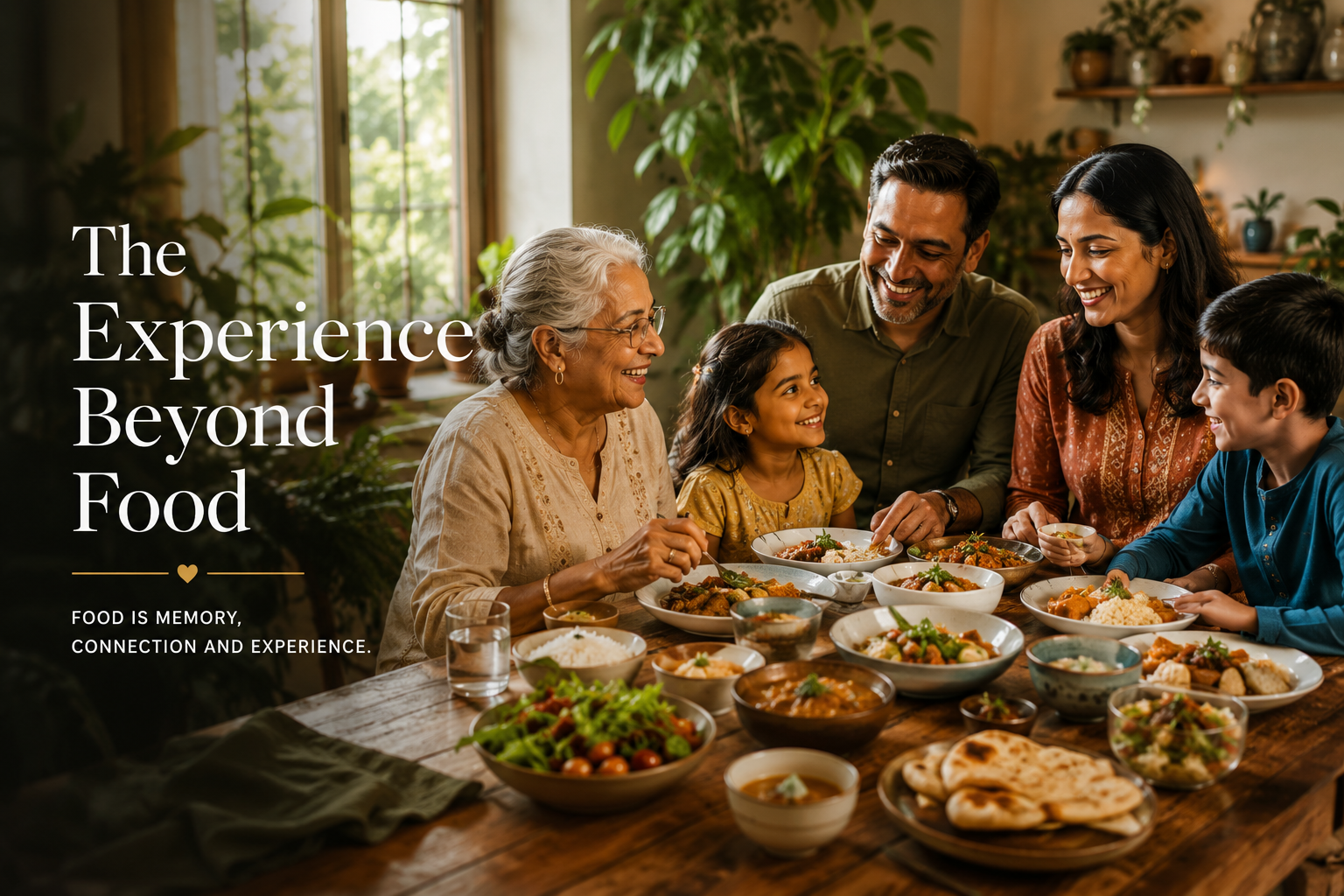
Food made with love also creates belonging. A shared meal can say, ‘You are part of this home.’ It can soften silence, start conversation, comfort sadness and celebrate ordinary days. Some of the strongest family memories are built not through speeches, but through repeated meals eaten together.
The magic is not only in the masala. It is in the feeling with which food is cooked, served and received. The same dish can feel different when made in anger, hurry, guilt or love. Food absorbs the atmosphere around it, and people feel that atmosphere even if they cannot explain it.
To feed with love is to remember that food is relational. It connects the cook, the eater, the home and the moment. It turns ingredients into care. It turns a table into a place of belonging.
In the end, the most memorable meals are not always the richest or most complicated. They are the ones that made us feel loved.
Continue the journey into food, feeling and philosophy. Happiness Now. Illness Never.



Join the Conversation