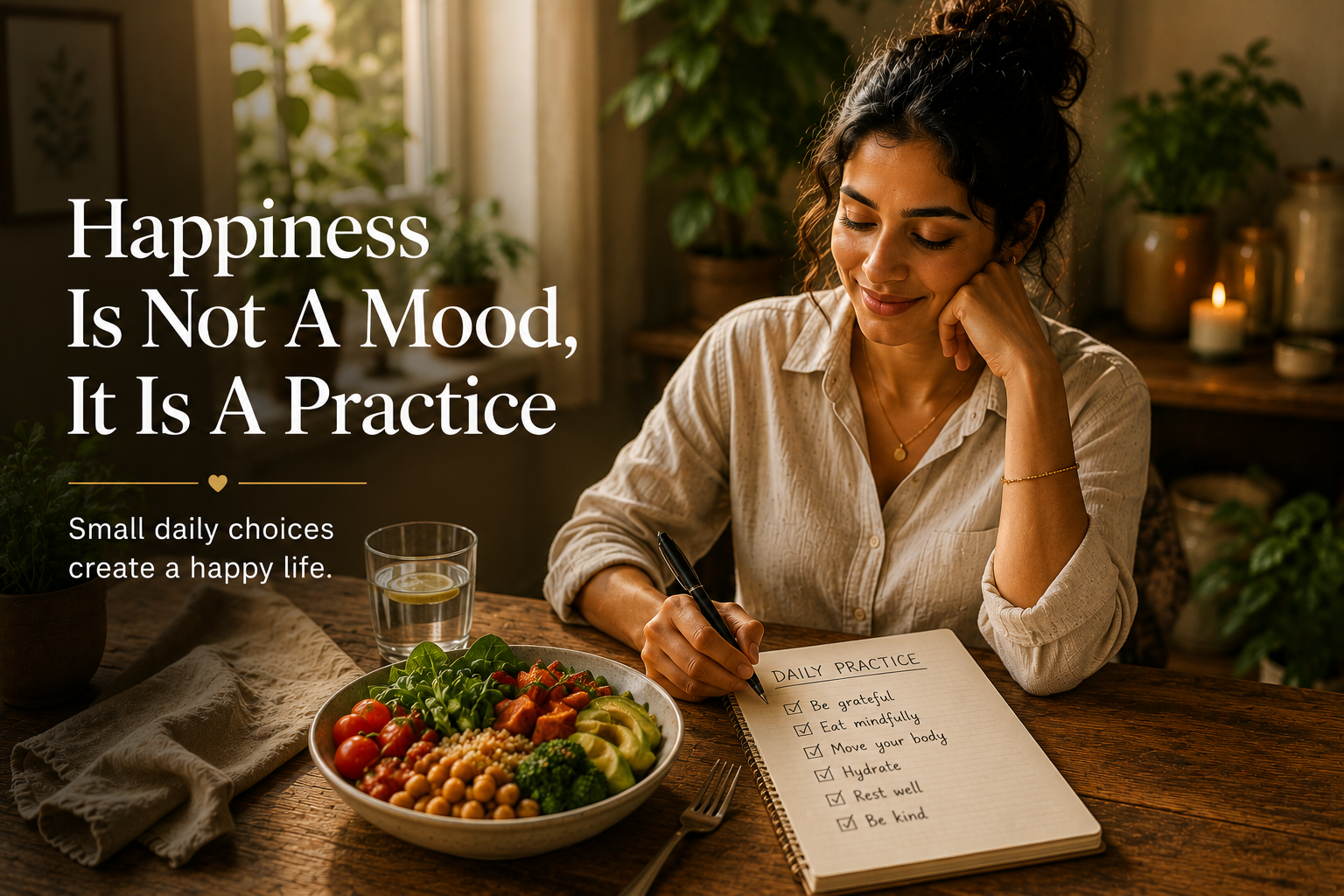
Happiness Is Not A Mood, It Is A Practice
Happiness is often treated as a mood that arrives when life becomes perfect. We wait for the right circumstances, the right people, the right body, the right money, the right timing and the right day. But if happiness depends only on everything outside us behaving beautifully, it remains fragile. It comes and goes with situations.
Real happiness is less dramatic and more practical. It is built through small repeated practices that slowly shape how we experience life. It lives in ordinary moments: a cup of tea made with attention, a meal shared without hurry, a kind word, a clean kitchen, a few minutes of silence, a choice made with awareness.
Food has a special place in this practice because it returns every day. We may miss many things, but we cannot completely avoid eating. This makes food one of the most consistent opportunities to practice presence, gratitude and care. A meal can be rushed, ignored and swallowed unconsciously, or it can become a small pause in the day.
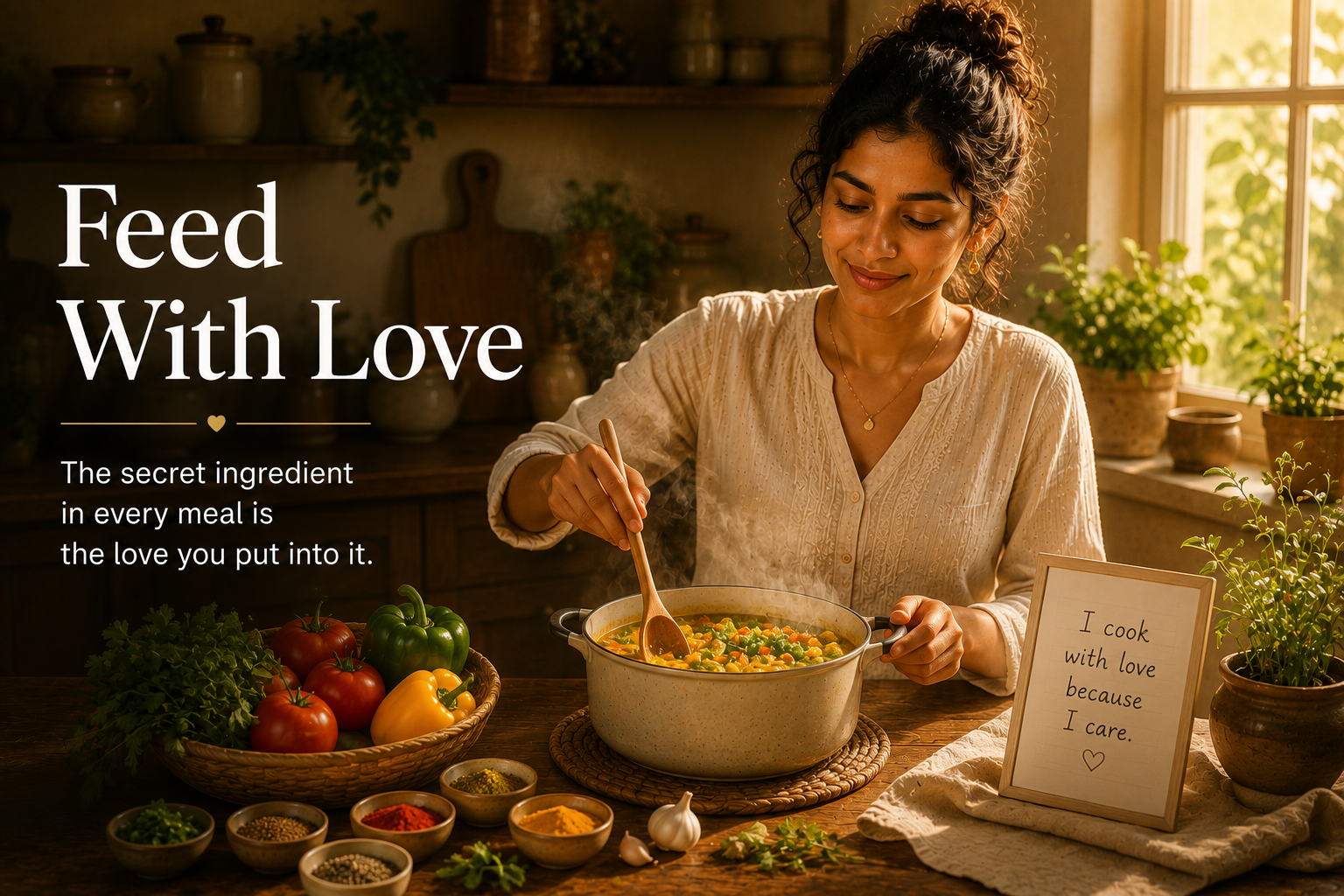
Cooking also creates a rhythm that the mind often needs. Washing, chopping, stirring, tasting and serving can bring us back to the present. The process does not need to be perfect or slow. Even quick cooking can become grounding when done with attention. The kitchen can become a place where the mind stops running ahead and begins participating in the moment.
Happiness is also strengthened through contribution. When we cook for ourselves or someone else, we create something useful and caring. A simple meal can change the energy of a home. It can make a tired child feel seen, a parent feel remembered, or a partner feel cared for. These small acts may not look grand, but they build emotional warmth.
Many people search for happiness in big achievements while ignoring the daily atmosphere of their lives. But the daily atmosphere matters deeply. The way we start our mornings, the food we eat, the tone at the table, and the small rituals we repeat all shape how life feels from inside.
This does not mean happiness denies pain. Difficult days will still come. Stress, grief, fatigue and uncertainty are part of human life. A happiness practice does not pretend everything is easy. It simply keeps one lamp lit inside the room. It gives us a way to return to ourselves even when life feels heavy.
A warm meal cannot solve every problem, but it can create a moment of steadiness. A shared table cannot remove every worry, but it can remind us that connection still exists. A small cooking ritual cannot control the future, but it can help us feel less lost in the present.
Happiness becomes more available when we stop waiting for it and start practicing it in ordinary ways. Food gives us that chance again and again. Every day, the kitchen quietly asks whether we want to rush through life or participate in it.
Happiness is not only a mood. It is a practice. And sometimes, that practice begins with the way we prepare, serve and receive our next meal.
Continue the journey into food, feeling and philosophy. Happiness Now. Illness Never.




Join the Conversation